
Daily Star Battle Practice
Use the Daily 5-puzzle Star Battle pack and unlimited seeded practice together to build a cleaner solving routine.
Star Battle
May 13, 2026
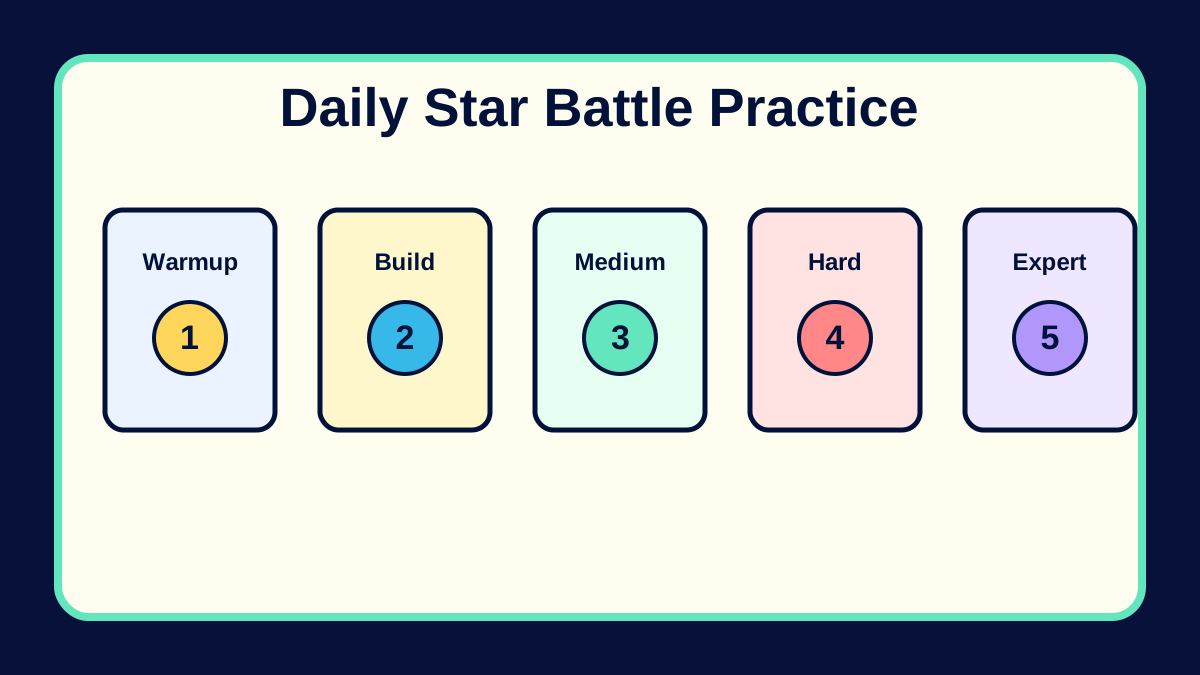
Use the Daily 5-puzzle Star Battle pack and unlimited seeded practice together to build a cleaner solving routine.
A daily puzzle is useful only if it improves how you solve tomorrow. The Star Battle Daily mode is built as a five-puzzle pack, from easier warmup boards to harder challenges, so you can practice more than one board without turning the session into a grind.
The point is not just to finish the pack. The point is to notice which deduction you keep missing: completed-unit cleanup, 2x2 no-touch limits, region locks, or pair capacity.
Why a Five-Puzzle Pack Works
One daily board is a habit. Five boards are a small training session. The first puzzle warms up the rules. The middle boards reveal whether your marking is consistent. The harder boards test whether you can keep the two-star count clean under pressure.
This structure also reduces luck. A single board may happen to match your favorite technique. A pack shows your actual solving pattern.
A Cleaner Daily Routine
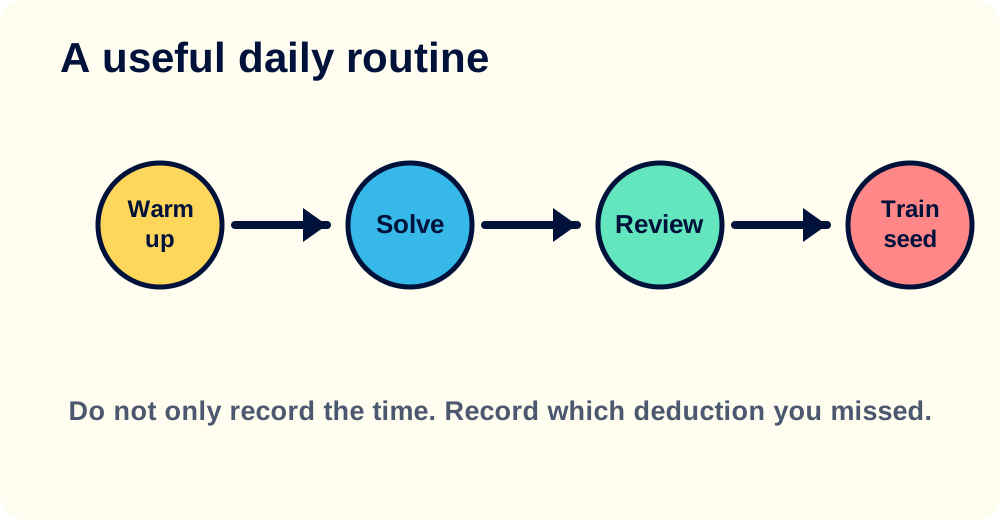
- Warm up slowly. On the first board, ignore speed and say why each star is forced.
- Track one mistake type. Choose one issue: missed diagonal contact, late cleanup, or weak region scanning.
- Review after each board. Ask which unit first became overloaded or underfilled.
- Use unlimited practice after the pack. Pick a seed and train the specific weakness you found.
- Stop before fatigue ruins feedback. Bad tired solves teach bad habits.
How Unlimited Practice Fits
Unlimited seeded practice is best after Daily mode, not instead of review. If the daily pack exposed weak no-touch cleanup, generate a smaller board and focus only on marking neighbors. If it exposed weak region locks, choose a larger board and scan every region before placing stars.
The seed matters because it makes practice reproducible. You can replay a board, compare your second solve, or share the exact puzzle context.
What to Record
Completion time is only one signal. More useful notes are specific: "missed a 2x2 block," "forgot a completed region," "placed before marking," or "did not notice two columns were reserved."
Those notes turn Daily mode into training. Without them, the next day begins from the same habits.
A Simple Review Template
After each daily board, write one short sentence in this format: "The board changed when I noticed ____." Fill the blank with a real deduction, not a mood. Examples: "a completed region," "two remaining cells in column 8," "a 2x2 block that could hold only one star," or "a region locked into rows 4 and 5."
This keeps review grounded. You are not judging whether you are good at Star Battle. You are identifying the mechanism that moved the board. After several days, patterns appear. If most of your notes mention missed cleanup, you know what to drill in unlimited mode.
A Weekly Practice Plan
- Day 1: solve the daily pack slowly and focus on no-touch cleanup.
- Day 2: track completed rows, columns, and regions after every star.
- Day 3: look for region locks before any contradiction test.
- Day 4: replay one unlimited seed and compare your second solve.
- Day 5: solve the daily pack normally, then audit your first mistake.
- Weekend: pick one harder seed and write down three deductions that solved it.
FAQ
How many puzzles are in Daily mode?
The intended Daily format is a five-puzzle pack, moving from easier warmup boards toward harder challenges.
What should I do after finishing the daily pack?
Use unlimited seeded practice to drill the technique you missed most often.
Should I focus on speed?
Not at first. Clean deductions make later speed possible. Rushing usually hides mistakes.
Related Guides
How to Play Star Battle
Learn the 2-star Star Battle rules, the empty-X-star click flow, and a clean first-board workflow for solving without guessing.
Star Battle Rules Explained
A precise guide to 2-star Star Battle rules: two stars per row, column, and region, with no touching stars and no long-diagonal ban.
Star Battle Strategy for Beginners
Beginner-friendly 2-star Star Battle strategy using counting, completed-unit cleanup, 2x2 limits, locked regions, and short contradiction checks.